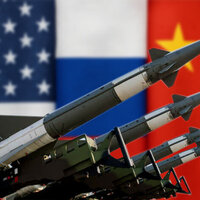


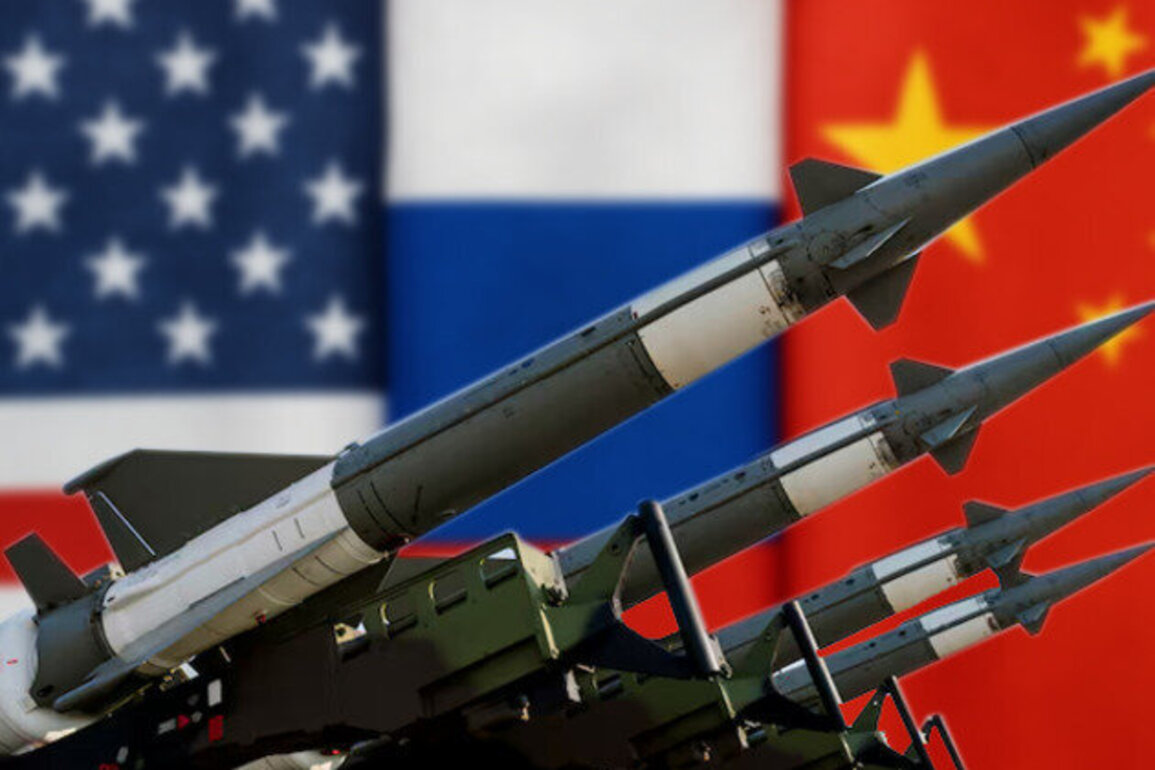
The United States, Russia and China are spending tens of billions of dollars on new nuclear weapons, modernising their missiles, strategic bomber aircraft and nuclear submarines.
John Wolfsthal, former adviser to Presidents Obama and Biden, now Director ofGlobal Riskat theFederation of American Scientists, says:
Here is very recent proof.
First came Russian President Vladimir Putinsannouncementin October that Russia had successfully tested two new nuclear weapons.
The long-rangeBurevestnikcruise missile utilised a nuclear engine, but in its test flight did not explode a nuclear warhead.
A Russian submarine next fired off a nuclear-powered underwater drone, thePoseidon. This weapon is also powered by a nuclear reactor and again was unarmed.
JEFF MCMULLEN: The boy with no eyes the dangers of a new nuclear arms raceTrumps reckless nuclear testing threats risk reigniting an arms race and repeating the horrors witnessed by those scarred by past detonations.
The Kremlin has made extraordinary claims through the Russian media that this silent killer can travel so far that it could hit the American West Coast and trigger a vastradioactive tsunami. It is not clear whether this prototype is more of a psychological weapon than a new strategic addition to Russias arsenal.
The U.S. is quick to respond when psychological warfare is underway.
On 4 November 2025, a closely followed military blog,The Aviationist, got hold of a dramatic close-up photograph. A B-52H bomber flying low over California appeared to be carrying what the bloggers claimed was the next generation of stealth nuclear cruise missile.
On 5 November, the U.S. carried out its own long-planned routine test of one of thousands of weapons it has in its nuclear triad. An unarmedMinuteman IIIintercontinental ballistic missile was launched from a U.S. Navy E-6B aircraft. Travelling some 6,700 kilometres across the Pacific it plunged into its target on theRonald Reagan Test Siteon Kwajalein Atoll in the Marshall Islands.
These are no more than glimpses of what the nuclear superpowers are up to in the 21st-century arms race.
Maximum secrecy surrounds the rapid development of an array ofnew technologiesfor weapons in space, cyber-attacks, advances in missile defence systems and the application of quantum computers to undersea warfare.
Executive Director of the Stockholm International Peace Research Institute (SIPRI),Dan Smith, says:
Artificial intelligence may speed up decision-making in crises. ButSIPRIs experts believethat this will mean a higher risk of a nuclear conflict as a result of miscommunication, misunderstanding or technical accident.
Pressure mounts on Albanese Government over failure to sign nuclear ban TreatyDespite overwhelming public support, Labor continues to stall on signing the nuclear weapons ban treaty highlighted in a damning Four Corners report.
The exact tally of nuclear warheads held by the nine nations believed to have these weapons is secret and contested even by the worlds most respected independent experts.
While President Donald Trump claimed recently that the United States had the most nuclear weapons, this is rejected by others.
The Federation of American Scientists (FAS) says Russia has 5,459 warheads and the U.S. has 5177.
TheArms Control Associationin Washington gives higher estimates with Russia having 5,580 warheads and the U.S. 5,225.
China is the third largest nuclear power with some 600 warheads. According to theCenter for Strategic and International Studies, China has doubled its nuclear arsenal in the past five years and will exceed 1000 warheads by 2030.
Frances force de frappe has 290 nuclear weapons. The United Kingdom has 225 with an addition of an unknown number of U.S. missiles from visiting American planes or carriers.
After the very recent renewal ofairstrikes and retaliatory shellingbetween India (180 nuclear warheads) and Pakistan (170 warheads) it is clear that even nuclear deterrents do not guarantee these nations will always avoid conflicts.
Israel never admits it has nuclear weapons but according to theArms Control Association, it has at least 90. During Israels conflict with Iran, the extraordinary U.S.attacks on Irans nuclearfacilities were intended to prevent the threat of another so-called rogue nuclear nation.
North Korea, with an estimated 50 nuclear warheads, is the outstanding rogue state. It has refused to join the nuclear test moratorium and has carried out six explosive tests. There are reports thata seventh explosive testis imminent, which might make sense of President Trumps recent accusation that Kim Jong-un, the leader he called little rocket man, isstill testingnuclear weapons secretly.
Nukes don't stop war, they just raise the stakesFrom Vietnam to Ukraine, the real-world record of nuclear deterrence suggests its better at fuelling arms races than preventing bloodshed.
Since the end of the Cold War, there have been reductions in the size of the U.S. and Russian nuclear weapons. The steady dismantlement of ageing nuclear warheads usually outstripped the deployment of new nuclear weapons.
We should be alarmed that the stockpiles of nuclear weapons are now expected to increase unless Presidents Trump and Putin can rekindle enough trust to further the 2010New START Treaty.
According toHans Kristensenof the Federation of American Scientists:
Reporting on some 30 conflicts has certainly shaped my view of the folly of war. You will need more than night vision goggles to see where this new nuclear arms race is taking us. Just remember that Mutual Assured Destruction is merely a theory, not a guarantee that nuclear weapons will prevent a global war. Virtually every terrible weapon invented has been used more than once.
DrJeff McMullenAM is a journalist, author and filmmaker known for his reporting and advocacy for 60 years. McMullen has been a foreign correspondent for Australian Broadcasting Corporation, reporter forFour CornersandSixty Minutes, anchor of the 33-part issue series on ABC Television,Difference of Opinionand director of independent documentaries. He was awarded the United Nations Media Peace Prize for his trilogy of hour-long documentaries about conflicts in Central America.
Related Articles
- Forty years after the Rainbow Warrior, justice still waits
- Nukes don't stop war, they just raise the stakes
- Treaty the planets best chance to get rid of its worst weapons
- Nuclear deterrence is a dangerous fraud
- The Oppenheimer imperative: Normalising atomic terror