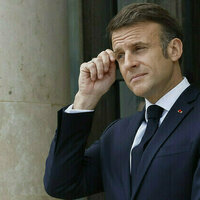


MARSEILLE, France (CN) - French President Emmanuel Macron is wrapping up a weeklong tour across Vietnam, Indonesia and Singapore that saw billions of dollars in new business deals, new trade agreements and investment announcements.
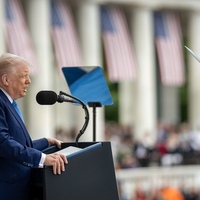
But experts argue the visit has profound geostrategic undertones stretching across the world, from presenting reliability in the era of U.S. President Donald Trump's uncertain tariff measures, to bolstering defense amid the Russia-Ukraine war and counterbalancing China.
"Macron is looking for arms sales to Vietnam and to Indonesia and also saying, 'look, you deal with us, you'll get entrance for your products into the EU and investment from the EU,'" Hall Gardner, professor of politics at The American University of Paris, told Courthouse News. "And this is to both counter Trump, who's threatening all these tariffs, and the defense part is to provide a counter to China and Russia to a certain extent."
On Friday, Macron opened the Shangri-La Dialogue in Singapore with a pointed address and a call for Asia and Europe to preserve "the global order." The summit is an annual, high-profile defense conference uniting heads of state from around the world, including U.S. Defense Secretary Pete Hegseth.
Macron called the division between the U.S. and China the biggest geopolitical risk facing the world.
"The time for non-alignment has undoubtedly passed, but the time for coalitions of action has come, and requires that countries capable of acting together give themselves every means to do so," Macron said.
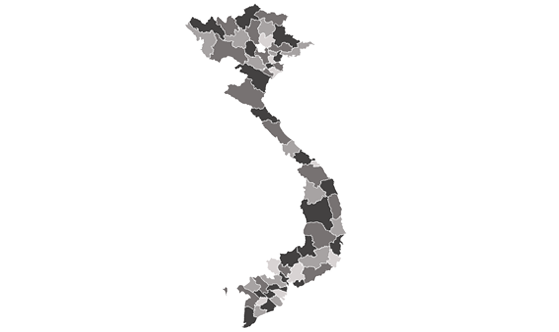
The tour kicked off in Vietnam, a former French colony, where Macron announced roughly $10 billion in new business deals, largely on Airbus planes and defense. In Hanoi, he stressed the need for "an order based on law" at a time of "both great imbalance and a return to power-driven rhetoric and intimidation" in an apparent jab at Trump.
"There has been a trend that has been emerging for a while now toward a questioning of the liberal order, whether from an economic point of view, or from a political and therefore democratic point of view with values of respect for democracy versus authoritarianism," Arnaud Mercier, a political scientist and professor in communication sciences at the Pantheon-Assas University Paris II, told Courthouse News.
"The message that France is trying to convey is that France and the European Union can embody a pole of stability that resists the authoritarian tendencies that are gaining ground in different countries, including, of course, Donald Trump's United States," he said.
In Indonesia, deals were oriented both around defense and culture. The nation finalized an order of 42 Dassault Rafale fighter jets and announced the purchase of two Scorpene Evolved submarines alongside 13 Thales ground control interception radars.
Additionally, the two countries will enhance trade on cultural products, like films and music. The Elysee said that almost $20 billion worth of contracts were signed in Jakarta during the visit.
Experts agree that reliability has been a key message for Macron throughout the week.
"President Macron's trip to Vietnam could also be a signal sent to the United States, I think," Phu Nguyen-Van, a research professor at France's National Center of Scientific Research, told Courthouse News. "It's that, yes, a relationship between countries is a long-term relationship - you can't do something overnight."
In a time where U.S.-China relations are strained, strengthening ties between the EU and southeast Asia offers a counterbalancing force.
"Macron's trip is both symbolic and strategic - concretely, he's looking to deepen economic ties and reaffirm France's Indo Pacific strategy, especially around critical supply chains, climate cooperation and digital infrastructure," Astrid Nordin, the Lau Chair of Chinese International Relations at the Lau China Institute, told Courthouse News. "Now, optically, he wants to position France as a distinct independent actor amidst growing U.S.- China rivalry."
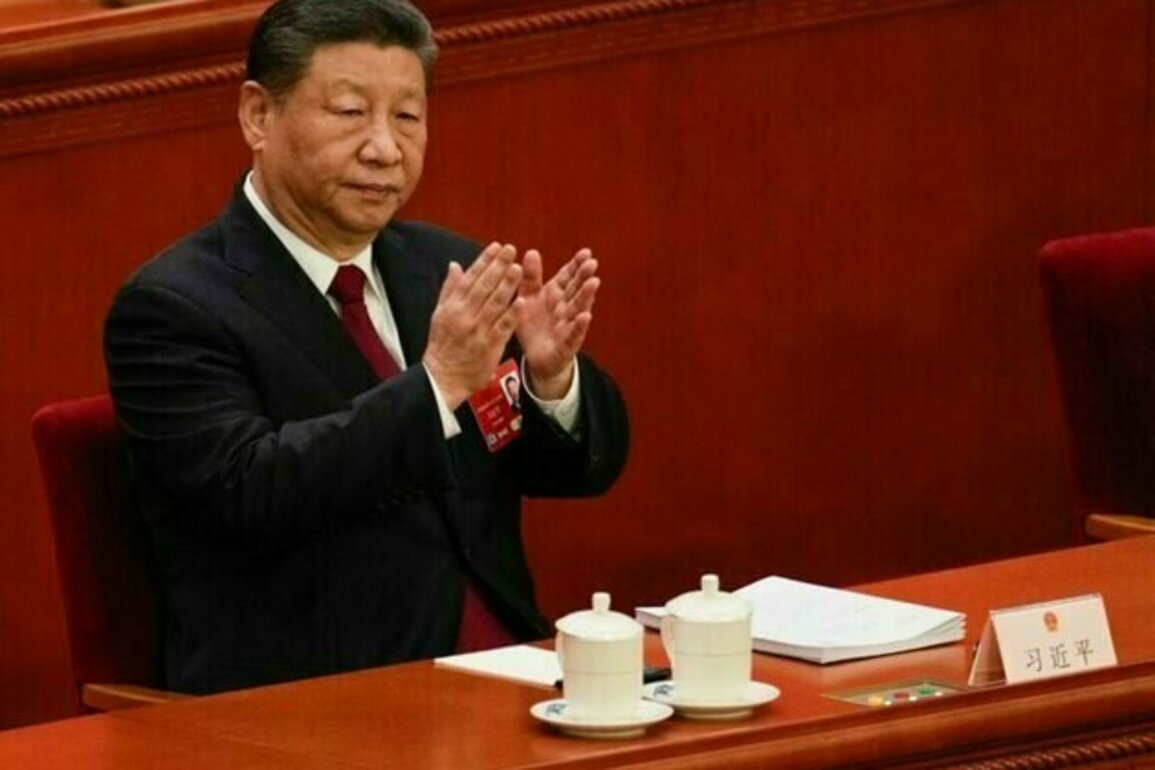
Nordin argues that countries across Europe in Asia are recalibrating their relationship to the U.S. amid the Trump administration's unreliability. Although China wasn't on the agenda, she believes that President Xi Jinping would welcome an era where the U.S. isn't necessarily the sole dominant trade force in the region.
The Russia-Ukraine war also is an influencing factor. Europe is being cut out of its Russia market, largely due to sanctions, according to Gardner, and finding a way to counterbalance Russia is likely a trend that will last.
"If the war with Ukraine continues, I really think we're going to see a real militarization of not just Europe, but Asia as well," he said. "And If Trump keeps the pressure on China supporting Taiwan, there will be a major arms race - it has already started, it's just a question of how intense it gets."
Source: Courthouse News Service